
Tuesday 5 May 2026

Spirit undergoes Chapter 11 liquidation, 66 aircraft set to return to lessors
Listen to the article
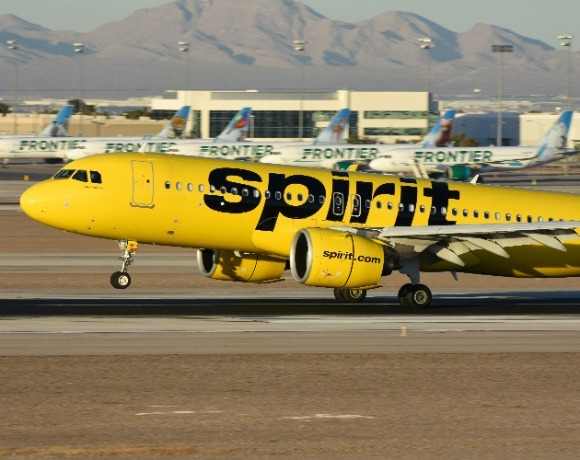
The Middle East fuel shock has pushed Spirit Airlines into liquidation, making it the first major airline to collapse during the crisis.
The carrier ceased all passenger operations at 3:00 am ET on Saturday 3rd May and will wind down in Chapter 11 after a last-ditch $500 million government rescue collapsed.
In court filings, Spirit said, "recent geopolitical events resulted in a massive and sustained increase in fuel prices, and a corresponding rapid and unexpected decline in the Debtors' liquidity situation."
The airline had been in advanced talks over a rescue package that would have helped it continue operations and granted the US government up to 90% of Spirit’s equity. Those talks ended after secured creditors objected.
When Spirit was informed late last week that the financing package was no longer available, the carrier concluded it had no choice but to wind down.
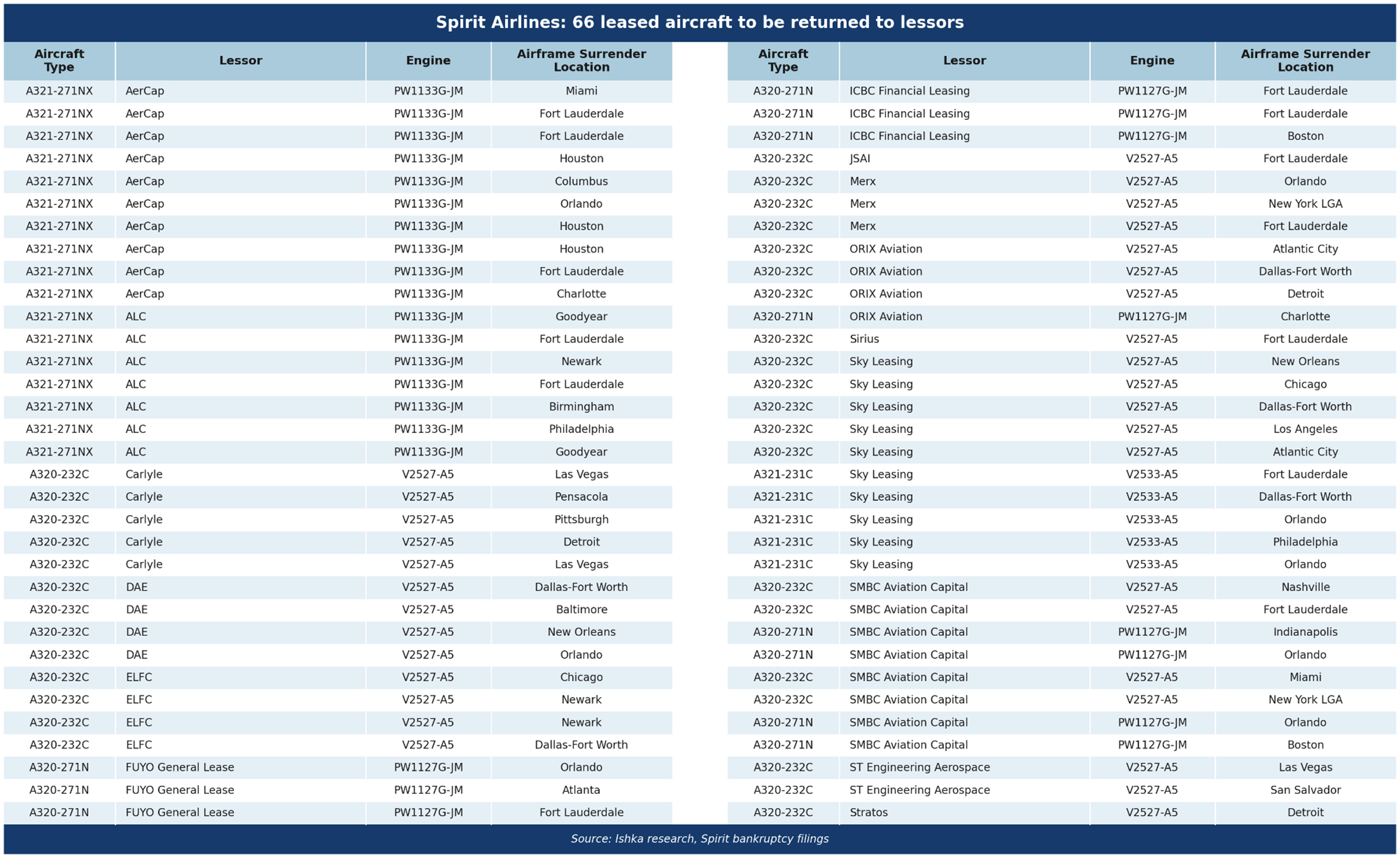
Spirit’s fleet consists of 114 Airbus A320-family aircraft, of which 66 are leased and will be returned to lessors, including AerCap, SMBC Aviation Capital and Sky Leasing (see full breakdown after the Ishka View).
A further 28 aircraft are owned by the airline and subject to financings, while 20 owned aircraft are already subject to a court-approved sale order. Spirit also leases ten spare engines and is party to 12 engine equipment leases under a previously approved green-time programme with IAE.
Fuel costs broke Spirit’s restructuring assumptions
Spirit’s collapse follows a sharp rise in jet fuel prices stemming from the Iran war and the closure of the Strait of Hormuz, which undermined the assumptions underpinning its restructuring plan.
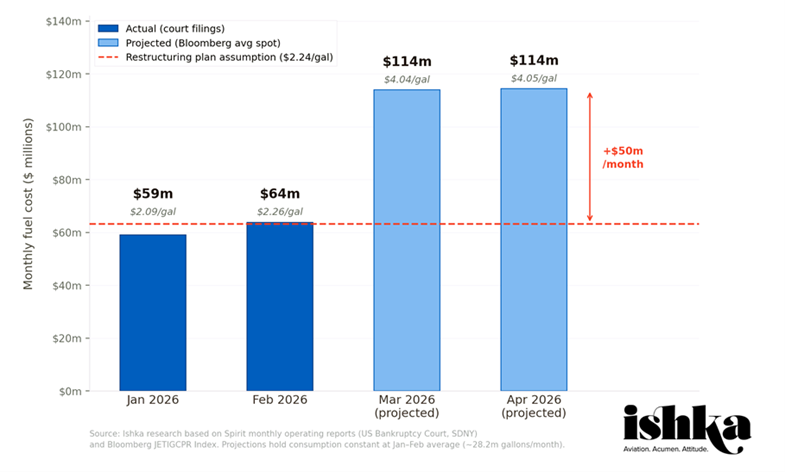
When Spirit completed its Chapter 11 reorganisation plan in February, it announced plans to shrink its fleet to around 76-80 aircraft. The plan, initially approved by creditors, assumed jet fuel prices of $2.24 per gallon.
The Middle East fuel shock overtook those assumptions. As fuel costs doubled, some creditors withdrew support for the restructuring proposal, arguing the plan no longer reflected Spirit’s operating reality.
Ishka's research last week, based on Spirit’s January and February operating reports, estimated that current jet fuel prices could add around $50 million per month to Spirit’s fuel bill. Spirit has since confirmed the scale of the impact in court filings, citing nearly $100 million of incremental fuel costs between 1st March and 30th April 2026 (see Insight).
Why creditors rejected the government rescue
Spirit's proposed government rescue ultimately failed because secured creditors saw little value in a new investment that would sit ahead of them in repayment priority while being consumed by daily operating losses.
Despite public support from the US government and President Trump, major bondholders, including Citadel, Ares Management and Cyrus Capital, opposed the $500 million package. The government also rejected a counterproposal from creditors, CBS News reported.
Thomas J. Salerno, partner at Kutak Rock, tells Ishka the secured bondholders’ opposition was unsurprising.
“It wasn’t taking $500 million and paying the bondholders with it. It was going to get burned up in the operation,” he says.
Salerno says bondholders would have calculated that they could recover more through liquidation than by allowing government capital to be consumed by fuel costs while Spirit’s aircraft and other assets continued to depreciate.
“That $500 million, while it sounds like a huge amount of money, would do nothing more than prolong the inevitable given the continued uncertainty in the oil markets,” he says.
Collapse after creditor agreement is not unprecedented
An agreed restructuring with core creditors coming undone due to a geopolitical event is unusual but not unprecedented.
After 9/11, the US government passed the Air Transportation Safety and System Stabilisation Act, which included $5 billion in direct aid, up to $10 billion in loan guarantees and temporary federal coverage of war-risk insurance.
Salerno points to National Airlines (National) as a relevant example. The low-fare carrier had a restructuring plan approved after 9/11, but the plan depended on the airline qualifying for a federal loan guarantee under the government’s post-attack support programme. When that guarantee did not materialise, National liquidated, "not unlike what you're seeing with Spirit," Salerno says.
Rescue faced political resistance
The proposed rescue also faced political criticism. Republican senators, including Ted Cruz, Tom Cotton, Josh Hawley and Lisa Murkowski, publicly criticised the idea, framing it as a poor use of taxpayer money and an inappropriate example of government involvement in private business.
While the US government has previously supported major companies in distress, a targeted rescue of Spirit involving up to 90% government equity would have been unusually direct.
Salerno contrasts the proposal with the federal support given to Chrysler during the 2008 financial crisis. Chrysler received government support before entering Chapter 11 in April 2009, but Salerno explains that the government’s role at the time was not equivalent to taking long-term control of the company.
“Even [with] Chrysler, where the government came in and did a bailout, it was taking a minority interest, and even that was going to be phased out over time. So, they weren’t really nationalising Chrysler,” Salerno says.
“If this deal had gone through, they would have essentially nationalised the airline.”
What lessors now face
Spirit’s Chapter 11 wind-down should give lessors a faster and more predictable route to aircraft recovery than a conversion to Chapter 7. However, recent filings show the process is unlikely to be clean.
Engines are intermingled across owned and leased aircraft, meaning aircraft returns may require coordination between Spirit, DIP lenders and aircraft equipment lessors. The Official Committee of Unsecured Creditors said only a handful of leased aircraft currently have their assigned engines installed.
Concerns have also been raised over the speed of Spirit’s proposed lease rejection process, with the carrier seeking to reject affected aircraft equipment leases by Friday 8th May 2026. The US Trustee objected to the original procedures that would have allowed Spirit to cease providing insurance and maintenance as of that date, arguing that counterparties had insufficient time to recover the aircraft and equipment.
Revised proposed orders appear to address some concerns by making arrangements for insurance, storage, and maintenance costs subject to agreement with individual aircraft equipment counterparties.
A hearing on Spirit’s requested wind-down relief is scheduled for 11:00 am ET today before Judge Sean H. Lane in the US Bankruptcy Court for the Southern District of New York.
The Ishka View
While Spirit had been in Chapter 11 for much of the past two years, most recently re-entering the process on 29th August 2025, the ULCC had reached an agreement in principle with its DIP lenders and secured noteholders just days before the Iran conflict began.
The carrier had expected to emerge in late spring or early summer 2026. Instead, it will no longer exist.
In bankruptcy filings, Spirit makes clear that a sharp rise in fuel costs tipped its restructuring into liquidation. Spirit’s collapse will renew pressure on the US government to support airlines facing the fuel shock, but the political threshold is likely to be high.
The Association of Value Airlines, a US industry group representing low-cost carriers, described Spirit’s wind-down as a “clear warning sign”, as it renewed calls for US government support.
Salerno says there is "always an economic urgency" in airline distress, but questions whether there will be the political will to act.
"The Spirit Airlines situation, I think, is not the same economic imperative, and will not have the same widespread economic ripple effects from failure," Salerno says.
"If Spirit Airlines goes out of business, do you think people are not going to be able to fly in the US? Of course not, they'll simply go to Delta."



Sign in to post a comment. If you don't have an account register here.